
Downtown Dartmouth Waterfront Revitalization Project: Spring 2026
April 2, 2026
Warm spring greetings!
Spring greetings from the Downtown Dartmouth Waterfront Revitalization (DDWR) Project team.
Now midway through the project, we are pleased to share an update on the Downtown Dartmouth Waterfront Revitalization (DDWR) Project, highlighting recent progress and what to expect in the coming months.Project progress update
The project team has completed Phase 1, the first phase of a four-phase process. This foundational phase is focused on building a strong understanding of the waterfront and community aspirations through:
- background research and technical review;
- community engagement and feedback collection;
- environmental inventory and site analysis; and
- development of four preliminary waterfront scenarios.
These initial scenarios were used as the foundation for further evaluation and were refined in Phase 2, which is currently underway and due to conclude in April 2026.
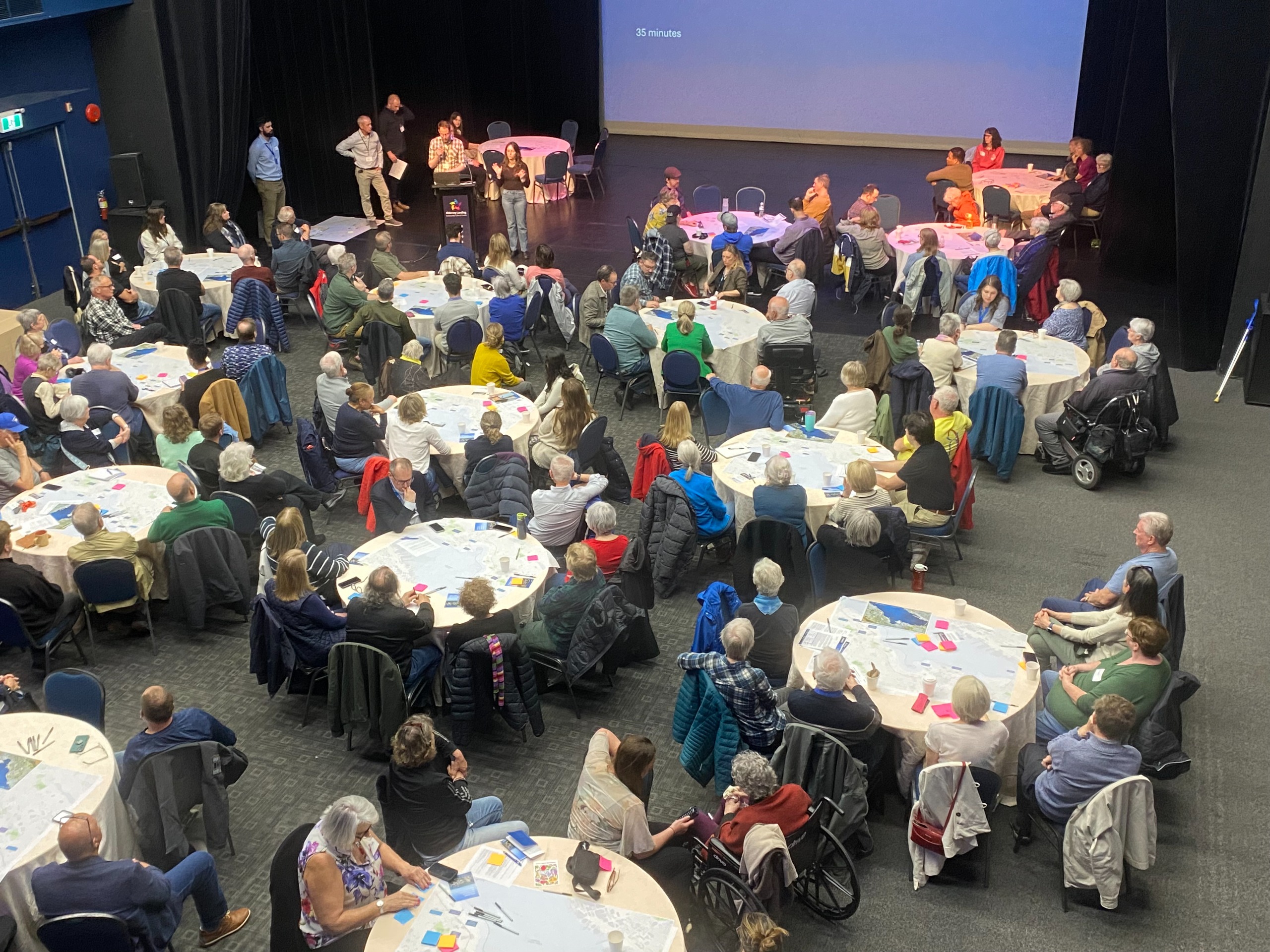
Based on community feedback received during Phase 1, the project team has developed a draft shared Waterfront Vision and a set of Guiding Principles to inform future design and decision-making.
The Downtown Dartmouth Waterfront Revitalization Project envisions a vibrant, inclusive and resilient waterfront that reconnects the community to the harbour through enhanced public access, expanded open spaces and a celebration of the area’s rich cultural heritage. The plan seeks to create a waterfront that tells the full story of Dartmouth’s past while shaping a more equitable and welcoming future.
Over the next 30 years, the waterfront will evolve into a dynamic hub for housing, innovation, tourism and recreation, supporting sustainable economic growth while integrating climate-resilient infrastructure and green design. Through thoughtful development, active transportation networks and vibrant public places, the waterfront will become a shared front porch for the city, where culture, commerce and community life thrive along the edge of the harbour.
Access, connection and wellbeing
- Reconnect city and waterfront: Reconnect downtown Dartmouth to the waterfront through safe rail crossings, transit and active transportation.
- Ensure public access: Ensure the waterfront remains public, barrier-free and accessible with trails that knit the waterfront together.
- Expand and enhance open spaces: Create and upgrade waterfront open spaces for recreation, leisure, community and cultural gathering, reinforcing the waterfront as a shared front porch for the city.
- Promote health and wellbeing: Design will support mental and physical health through access to active transportation routes, outdoor fitness amenities, safe lighting and all-ages play spaces.
Nature, sustainability and climate action
- Strengthen connections to nature: Emphasize ecological restoration and access to natural systems.
- Champion sustainability: Use green building standards, renewable energy and circular waste systems to reduce the waterfront’s ecological and carbon footprint.
- Design for climate resilience: Protect people, property and ecosystems from sea-level rise and storm surge.
Identity, culture and tourism
- Enhance waterfront identity and sense of place: Celebrate Dartmouth’s distinct character through locally inspired design, storytelling and materials.
- Honour diverse histories: Celebrate Dartmouth’s diverse histories and highlight the contributions of the Mi’kmaq, Black Loyalists, Jamaican Maroons and other communities through murals, digital media, plaques and cultural programming.
- Support arts, culture and creativity: Design flexible public spaces to host performances, public art installations and support artistic expression by local and underrepresented artists.
- Promote tourism and culture: Activate the waterfront with year-round festivals, cultural events, public art trails and wayfinding to help visitors discover the waterfront.
Inclusive growth and economic vitality
- Preserve working waterfront functions: Protect Dartmouth’s maritime character and marine industries and integrate them with public space and education opportunities.
- Support economic growth: Enable investment and innovation through clear development frameworks and streamlined approvals with built-in community benefits.
- Foster inclusive development: Include a balanced mix of affordable, mid-range and market housing together with mixed-use retail, services and amenities.
Design innovation and excellence
- Elevate design excellence: Set high standards for architectural and public space design, guided by clear design guidelines prioritizing coastal vernacular, durable materials and human-scaled facades.
- Encourage innovation and adaptability: Support pilot projects, temporary uses and flexible zoning that allow experimental designs and programming to transform the waterfront over time.
Collaboration and long-term stewardship
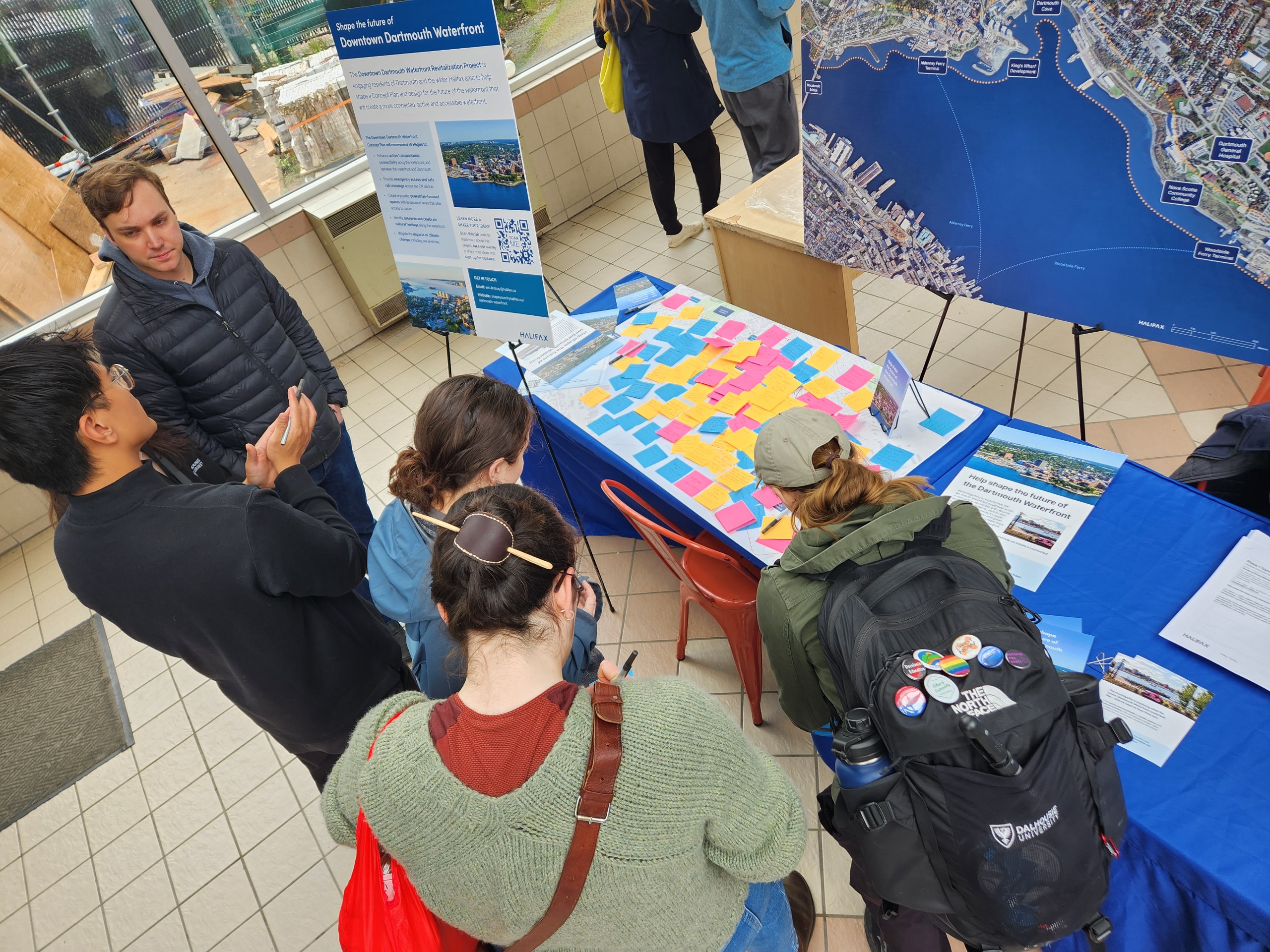
- Build in partnership with community: Continue engaging the community through workshops, pop-ups and ongoing dialogue.
- Plan for phased long-term change: A clear phasing strategy with regular five-year reviews will keep the plan responsive, accountable and aligned with community aspirations.
- Secure long-term stewardship and governance: Establish a long-term governance model to coordinate implementation, monitor progress and ensure that public interest guides future decisions. Stewardship may involve public-private partnerships, Indigenous co-management and dedicated oversight bodies to maintain momentum and integrity.

- Phase 2 (Fall 2025 – Spring 2026)
- Four scenarios are being refined into two preferred development concepts for internal review.
- Phase 3 (Spring 2026)
- Additional details will be added to the preferred concepts, including design and technical considerations.
- Phase 4 (Summer – Fall 2026)
- A preferred development concept, including cost estimates, phasing, planning policies and zoning criteria will be shared with the community for feedback.
- Final report (Late 2026)
- The final plan will be presented to Community Planning and Economic Development (CPED) Standing Committee and Regional Council.

We look forward to reconnecting with the community in summer and fall 2026 to present and take feedback on the draft conceptual development plan, ahead of submitting the final report to the Community Planning and Economic Development (CPED) Standing Committee and Regional Council later in 2026.
Community input will continue to play an important role as the project moves ahead, and additional engagement opportunities are anticipated as the work progresses. We encourage you to stay tuned to the project website and the municipality’s social media for updates, upcoming events and future opportunities to get involved.
www.engagehalifax.ca/dartmouth-waterfront