Peace and Friendship Park, located in Halifax’s South End, was originally established by the Canadian National Railway in 1931 as Park Nova Scotian, later renamed Cornwallis Park. Its early design featured a formal layout with linear pathways converging on a central statue of Edward Cornwallis, the city’s British founder. For decades, both the statue and the park functioned as symbols of commemoration. However, beginning in the 1980s, Indigenous communities and others increasingly challenged Cornwallis’s legacy, prompting broader public debate about the park’s meaning.
June 2026 Project Update:
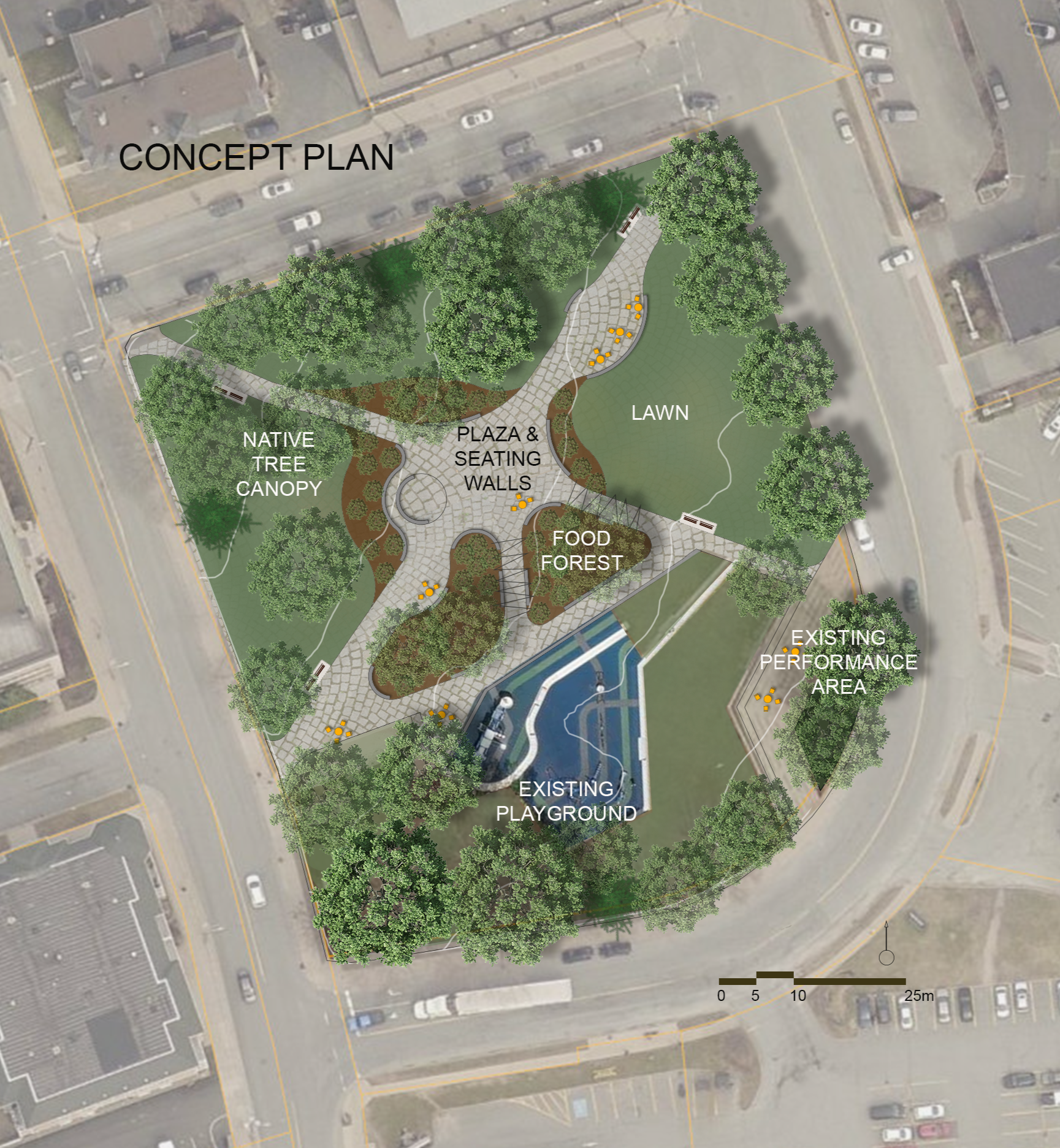
As it stands, the park still reflects formal elements of its commemorative origins and does not yet embody the broader cultural values the municipality aims to foster. Initial engagement on the redesign involved the HRM Office of Diversity & Inclusion, the Mi’kmaw Native Friendship Centre, and the Mi’kmaq Rights Initiative (KMKNO). Although the goal was not to transform the site into a Mi’kmaq‑specific park, discussions emphasized modest landscape interventions that could cultivate a more inclusive and welcoming environment. These included restoring native plant species, incorporating natural materials, introducing softer, curvilinear forms, and creating social space for community events and programming.
The 2024 public engagement for Peace & Friendship Park gathered input from 176 survey respondents, with strong support for the four proposed planning themes: Inclusivity, Reconciliation, Connection with Nature, and A Place of Expression. When envisioning the future park, respondents expressed interest in shifting away from the current formal layout. A large majority supported adding more social and gathering spaces, increasing naturalized landscapes, and blending formal and informal design elements.
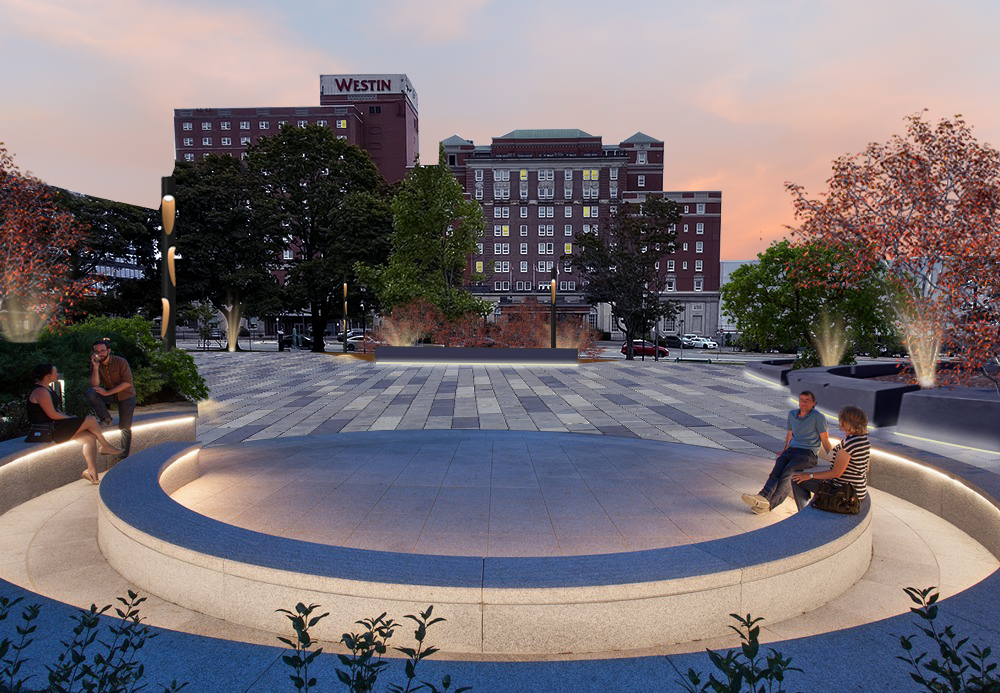
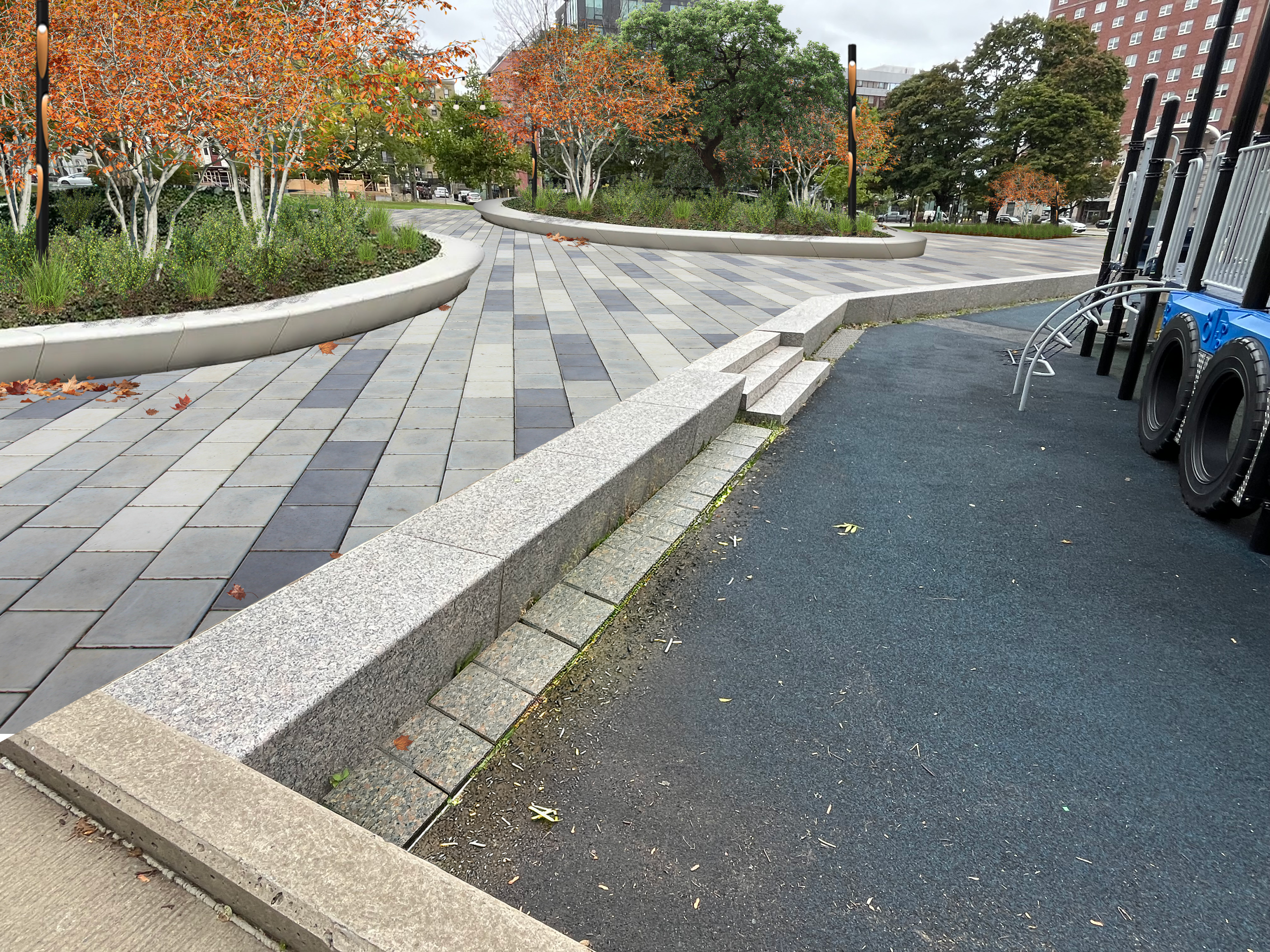
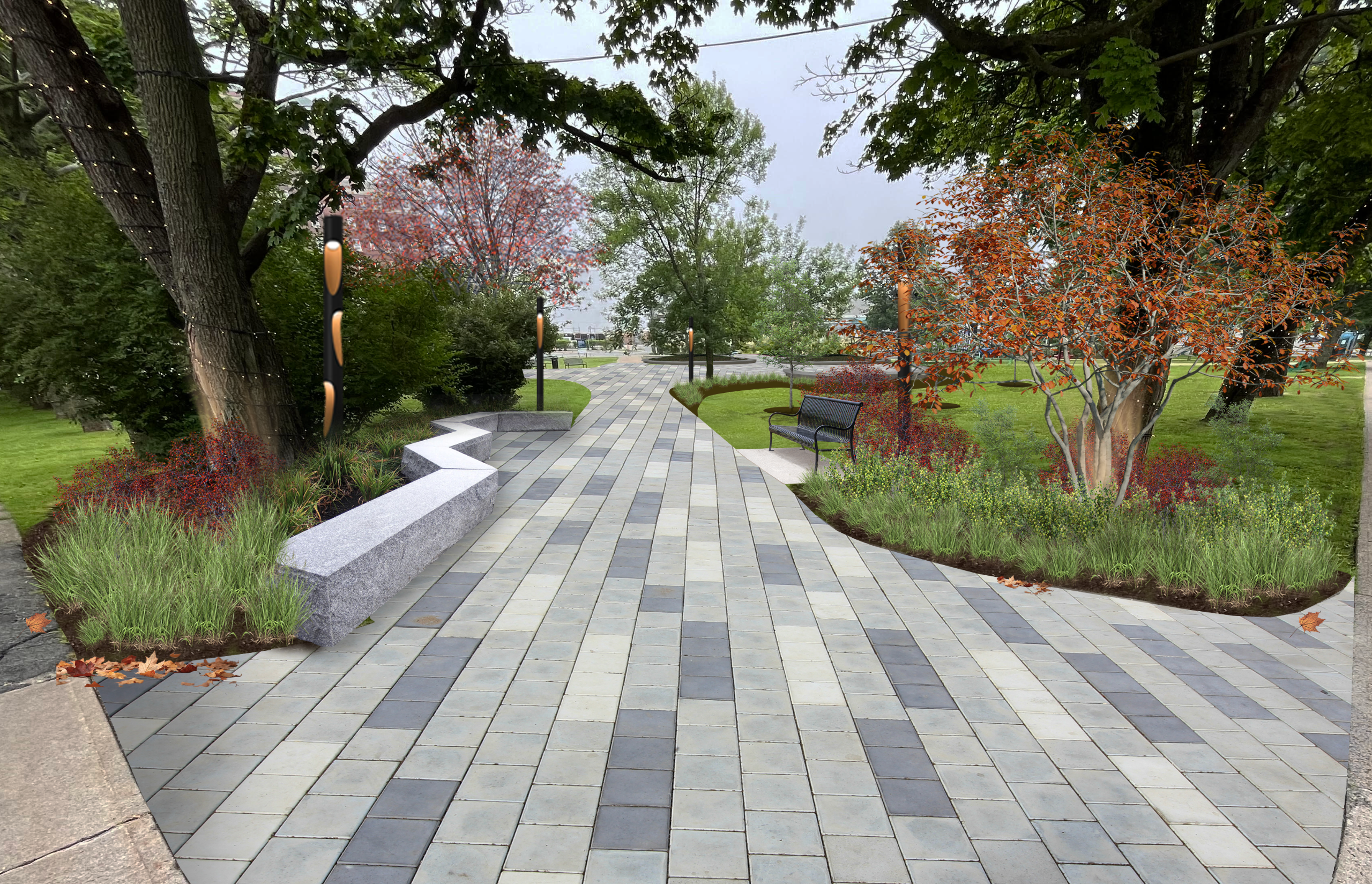
The following conceptual images illustrate the revisions made in response to the feedback above.
Image 1 of 4